


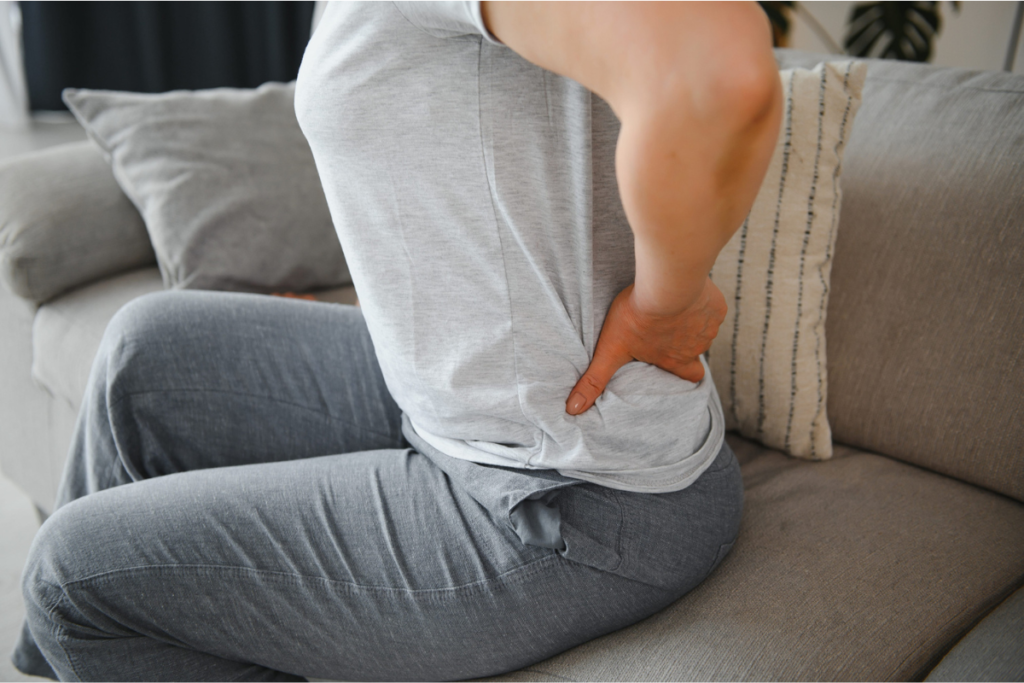
Mechanical Back Pain
Mechanical back pain originates from internal structures, including the spine, its connecting joints, and surrounding soft tissues. It is the most common type of back pain, affecting about 8 in 10 people at least once in their lifetime. (1) Although distressing and disabling, it is rarely dangerous and usually self-limiting, meaning it will resolve without treatment. In most cases, there is no clear underlying cause for the pain. This is often referred to as “non-specific,” as it cannot be attributed to a specific structure, pathology, or disease. (5) The spine itself is strong and resilient, not easily damaged. It is widely accepted that a sprain or strain of a ligament or muscle, and/or minor issues with the discs or facet joints between vertebrae, may cause mechanical back pain. (2) Most people recover from mechanical back pain quickly, with some not needing any treatment at all. Mechanical back pain usually presents as a sudden-onset (acute) and may be present for up to 6 weeks. In some cases, persistent (chronic) pain may develop. (2,5)
Frequently Asked Questions
Mechanical back pain simply means that the source of the back pain that you are experiencing can be explained by one of the main structures of the back, such as the joints, bones and soft tissues.
Mechanical back pain is extremely common.
60 – 80% of people in the UK report back pain at some time in their lives. (1)
For most people, low back pain is simple and will resolve without treatment; serious specific causes are rare. (1,2)
No. The majority of cases of mechanical back pain respond well to exercise, advice and simple pain relief.
A small percentage of back pain can be associated with serious pathology and therefore it is important to monitor for:
Saddle anaesthesia or paraesthesia (numbness or altered sensation around the genital region).
Recent onset of bladder dysfunction.
Recent onset of faecal incontinence.
Perianal/perineal sensory loss.
Highly demanding jobs, prolonged standing and awkward lifting are the most consistent factors predisposing to low back pain. (3)
People who are overweight or obese. (4)
Significant work-related stress.
Those who had a previous occurrence of back pain.
Family history of back pain.
Pain and stiffness in the back, exacerbated by certain movements and eased by others.
Occasionally some people also get some associated leg pain from nerve irritation.
Modify your activity.
Advice from a qualified physiotherapist will be helpful in most cases.
Undertaking regular gentle exercises for mobility and strength of the spine.
It is important to stay active and continue to use the back and spine to avoid it becoming weaker and stiffer.
This will depend upon several factors including, but not limited to, medical/lifestyle factors, stage of injury, your ability to follow your rehabilitation, etc.
Everyone is different but consistently undertaking a back rehabilitation programme prescribed by your physiotherapist should allow significant improvement in symptoms within 6-12 weeks.
We recommend consulting a musculoskeletal physiotherapist to ensure exercises are best suited to your recovery. If you are carrying out an exercise regime without consulting a healthcare professional, you do so at your own risk.

Cauda Equina Syndrome (CES) is an extremely rare condition that can occur alongside back pain. CES is a medical emergency and requires immediate A+E attendance.
This is not an exhaustive list. These factors could increase the likelihood of someone developing mechanical back pain. It does not mean everyone with these risk factors will develop symptoms.
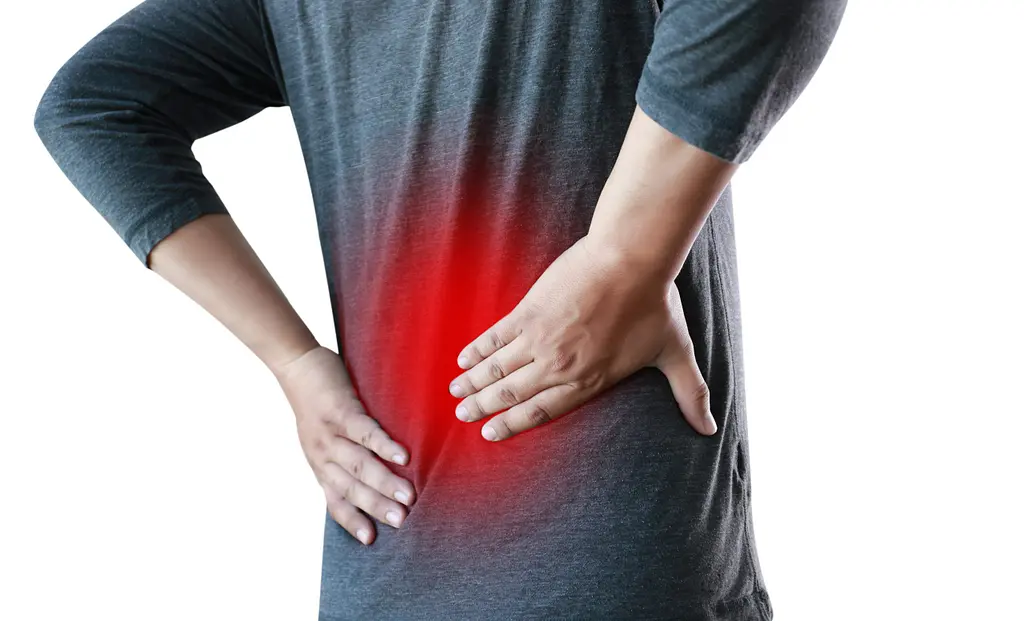
Back pain is extremely common. 60% – 80% of people in the UK report back pain at some time in their lives. Chronic (long term) low back pain affects up to 23% of the population worldwide. It is estimated that 24% to 80% of patients with mechanical back pain will have a recurrence after one year. (1,2)
Musculoskeletal physiotherapists and other appropriately qualified healthcare professionals can provide you with a diagnosis by obtaining a detailed history of your symptoms. A series of physical tests might be performed as part of your assessment to rule out other potentially involved structures and gain a greater understanding of your physical abilities to help facilitate an accurate working diagnosis.
Your treating clinician will want to know how your condition affects you day-to-day so that treatment can be tailored to your needs and personalised goals can be established. Intermittent reassessment will ascertain if you are making progress towards your goals and will allow appropriate adjustments to your treatment to be made. Imaging studies like an MRI or ultrasound scan are usually not required, unless more sinister pathology is suspected. There are occasions where further investigations may be appropriate and your physiotherapist can provide you with an effective explanation of how this can help your recovery and rehabilitation.
As mentioned, many cases of mechanical back pain will improve with exercise, movement and time. If concerned, it is recommended to have a thorough assessment by an experienced physiotherapist who can advise you on the self-management techniques that may be best suited to you. Your physiotherapist can provide you with an effective explanation as to why you are presenting with your symptoms, and give you knowledge and confidence to effectively manage your symptoms to support your recovery. (1)
In general, keeping active is very important rather than resting. Try to keep up with your normal daily activities as best you can; working with some pain and discomfort is completely safe and you will not do any further damage. Just make sure to pace your activities and not do too much at once as this may aggravate your symptoms. (1) It is important to understand that resting for prolonged periods of time with back pain can make the pain worse as the spine gets stiffer and weaker.
It is important that you try and complete the exercises you are provided as regularly as possible to help with your recovery. Rehabilitation exercises are not always a quick fix, but if done consistently over weeks and months then they will, in most cases, make a significant difference.
Various exercise types all have a positive impact on symptoms, therefore finding activities that you enjoy is a good place to start. Specific, individualised rehabilitation provided by your physiotherapist may include activities to increase your range of movement, strength and function to return to sports, playing with children, or any other activities you love.
Below are three rehabilitation programmes created by our specialist physiotherapists targeted at addressing mechanical back pain. In some instances, a one-to-one assessment is appropriate to individually tailor targeted rehabilitation. However, these programmes provide an excellent starting point as well as clearly highlighting exercise progression.
Our team of expert musculoskeletal physiotherapist have created rehabilitation plans to enable people to manage their condition. If you have any questions or concerns about a condition, we recommend you book an consultation with one of our clinicians.
As it is important to keep active with mechanical back pain, it is likely your clinician will advise paced return to sporting activity and daily normal life as soon as you are able. It is important, based on the pain you are experiencing, that you gradually return to sport/normal life by slowly increasing the length of time you exercise for, or the intensity, as the mobility and strength of your back improves with the treatment exercises you are undertaking.

Alongside appropriate exercises, sometimes back pain treatment can involve acupuncture and other soft tissue therapies. In a small proportion of patients, based on symptoms arising from neurological assessment, they may be referred on for spinal surgical opinion and sometimes then surgery after this.
References
Other Conditions in Lower Back, Upper Legs, Orthopaedics, Pain
