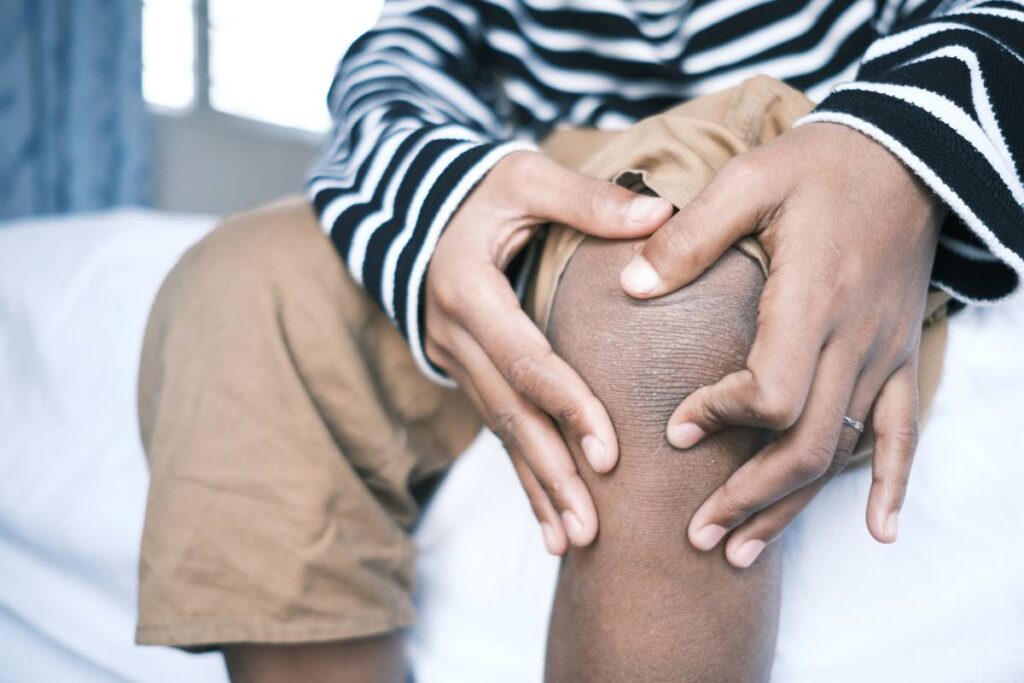
Knee Osteoarthritis
Osteoarthritis is the most common form of arthritis and one of the leading causes of pain and disability worldwide. It can affect people at any age, but it is most common in people over 50 years of age (1). Almost any joint can be affected by osteoarthritis but it affects the knees most commonly, followed by the hips and the small joints of the hands (8). Patients often report pain accompanied by varying degrees of functional limitations and reduced quality of life. It can be diagnosed using the patient’s age, symptoms and a physical examination, with or without an X-ray. Exercise, education and weight loss improve symptoms and function in most patients with knee osteoarthritis and should be trialled initially.
Knee osteoarthritis is often described as ‘wear and tear’, implying that the joint has ‘worn out’. Symptoms and physical function are frequently assumed to be directly related to these ‘wear and tear’ changes, which might make you think that symptoms would worsen with further use. This is a common misconception as appropriately loading (exercising) the knee stimulates healing and is essential for joint health. Furthermore, ‘wear and tear’ changes do not always correspond with symptoms as people can have changes identified with imaging (X-ray and magnetic resonance imaging) but be pain-free. (9)
Frequently Asked Questions
All joints, including the knees, go through a cycle of damage and repair during their life. This process can cause changes in their structure and this is known as osteoarthritis.
Osteoarthritis is the most common joint condition worldwide, affecting an estimated 10% of men and 18% of women over 60 years of age. (7)
The knee is the most affected joint in the body from osteoarthritis. (6)
Approximately 18% of the UK population aged over 45 years have sought treatment for osteoarthritis of the knee. (8)
No. Knee osteoarthritis is very common and often people will have no symptoms.
You can have osteoarthritic related changes and be pain-free. (9)
With the right assessment, treatment and rehabilitation symptoms can be well managed.
Osteoarthritis can affect anyone at any age, but it is more common in women over 50 years of age. (7)
People who are overweight are at an increased risk of suffering from osteoarthritis. (7)
Previous knee injury and family history of osteoarthritis can increase your risk of suffering from the condition.
Pain is related to use and can be relieved with rest but often feels worse at the end of the day.
Modest swelling within the joint (effusion).
Grating sensation (crepitus) whilst moving the knee.
Late-stage knee osteoarthritis:
Pain can be more pronounced at night or persist at rest.
Difficulty fully bending or straightening the knee.
Bones may be enlarged and the legs can appear ‘bow-legged’.
Seek advice from a musculoskeletal specialist. Try to keep active and complete regular exercises.
Heat therapy.
Over the counter medications can be taken if appropriate.
Knee braces can help in certain cases.
Maintain a healthy weight.
There is no cure for osteoarthritis, but by taking a proactive approach you can significantly improve your symptoms. (3)
Flare-ups are common but will likely settle within a few months, especially if managed well.
Learning to manage your symptoms, and keeping active and positive will give the best outcome in most instances.
We recommend consulting a musculoskeletal physiotherapist to ensure exercises are best suited to your recovery. If you are carrying out an exercise regime without consulting a healthcare professional, you do so at your own risk.

Early-stage knee osteoarthritis signs and symptoms:
Late-stage knee osteoarthritis signs and symptoms:
Abnormality in any of the knee tissues (e.g. cartilage, ligament, meniscus) can increase stress within the joint, which can contribute to tissue damage and subsequent repair. The repair process is slow but effective and can often make up for the initial damage. Several factors can influence joint stress and inhibit the repair process; the factors ultimately result in the breakdown of cartilage and bone within the joint.
This is not an exhaustive list. These factors could increase the likelihood of someone developing knee osteoarthritis. It does not mean everyone with these risk factors will develop symptoms.

Osteoarthritis is the most common joint disease worldwide, affecting an estimated 10% of men and 18% of women over 60 years of age. (7) Approximately 18% of the UK population aged over 45 years have sought treatment for osteoarthritis of the knee. (8)
Musculoskeletal physiotherapists and other appropriately qualified healthcare professionals can provide you with a diagnosis by obtaining a detailed history of your symptoms. A series of physical tests might be performed as part of your assessment to rule out other potentially involved structures and gain a greater understanding of your physical abilities to help facilitate an accurate working diagnosis.
Your treating clinician will want to know how your condition affects you day-to-day so that treatment can be tailored to your needs and personalised goals can be established. Intermittent reassessment will ascertain if you are making progress towards your goals and will allow appropriate adjustments to your treatment to be made. Imaging studies like an MRI (magnetic resonance imaging) or X-rays are not always required to achieve a working diagnosis, but in unusual or persistent presentations they may be warranted.
Education, exercise and weight management are core treatments for knee osteoarthritis irrespective of severity, age, disability or co-existing medical conditions. (11) Self-management strategies should be developed with the individual, ensuring positive lifestyle changes are implemented alongside the core treatments and that they are maintained in the long term. You might also be advised to use over the counter medications such as pain relief/anti-inflammatories (prescribed by your GP).
It is not possible to prevent osteoarthritis changes altogether, but measures can be put in place to improve outcomes. (3) Rehabilitation programmes should be performed 2-3 times per week for at least 12 weeks, but ideally maintained long term.
Our team of expert musculoskeletal physiotherapist can create rehabilitation plans to enable people to manage their condition. If you have any questions or concerns about a condition, we recommend you book an consultation with one of our clinicians.
For patients wanting to achieve a high level of function or return to sport, we would encourage a consultation with a physiotherapist as you will likely require further progression beyond the advanced rehabilitation stage.
As part of a multi-modal treatment approach, your musculoskeletal physiotherapist may also use a variety of other pain-relieving treatments to support symptom relief and recovery. Whilst recovering you might benefit from a further assessment to ensure you are making progress and establish the appropriate progression of treatment.

Corticosteroid injections may be considered if appropriate conservative management has failed. They may produce an improvement in pain and physical function, but effects are likely to decrease over time. Even if conservative management does not achieve a marked improvement, careful consideration is heavily encouraged as in some cases they cause more harm than good.
Surgery, including high tibial osteotomy and total knee replacement, might be options if conservative management fails in those that have a significant level of decreased physical function, discomfort and advanced osteoarthritis.
References
Other Conditions in Knees