


Dupuytren’s Contracture
Dupuytren’s contracture is a condition where the tissue under the skin of the palm slowly becomes thicker and tighter over time, which can eventually pull one or more fingers into a bent position.
It develops gradually over years and is not dangerous, but it can affect everyday hand movements if it progresses. Most early cases remain mild, and many people never require medical intervention. (2)
Frequently Asked Questions
Dupuytren’s contracture is a condition where the tissue under the skin of the palm slowly becomes thicker and tighter over time, which can eventually pull one or more fingers into a bent position.
Relatively common, affecting an estimated 5–12% of people worldwide, with rates increasing as people age.
It becomes more frequent after the age of 45, and only a portion of those with early signs develop significant symptoms. (3)
No. Most people have mild symptoms that progress very slowly, often over years and many never require treatment.
It is not dangerous and early stages rarely affect hand use.
If tightness or finger bending starts to impact daily tasks, there are effective surgical treatments available. (4)
Dupuytren’s is more common in people with a family history, those of Northern European descent, and in men over 45.
It is also seen slightly more often in people with diabetes, epilepsy or higher alcohol intake. However, it can affect anyone. (2,7)
Typical symptoms include:
Small firm nodules in the palm.
Puckered or thickened skin.
Tightness that develops into the fingers.
Over time, the fingers, often the ring or little finger, may bend toward the palm and become difficult to fully straighten. Symptoms are usually painless. (2)
In early stages, simply staying active and continuing with normal activities can help keep the hand comfortable.
Monitoring the condition is often enough. If the finger position starts to change, physiotherapy can help maintain movement and clinicians can advise when further treatment might be indicated. (3)
We recommend consulting a musculoskeletal physiotherapist to ensure exercises are best suited to your recovery. If you are carrying out an exercise regime without consulting a healthcare professional, you do so at your own risk.
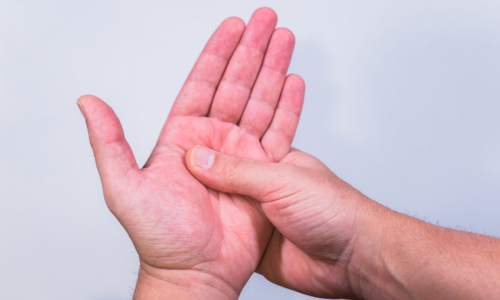
In the early stages, Dupuytren’s contracture often begins with small, firm nodules in the palm usually near the base of the ring or little finger. These nodules may make the overlying skin look puckered or dimpled and can be either painless or mildly tender.
Over time these nodules can develop into thickened cords along the palm. This is a gradual, slow process in which these cords tighten and start pulling the fingers inward, reducing their ability to fully straighten.
As the condition progresses, people may notice increasing difficulty when placing the hand flat on a surface. The ring and little finger are most commonly affected, though any finger may be involved.
Symptoms typically worsen over months to years and may eventually interfere with everyday tasks such as putting on gloves and gripping objects. (6,7)
The exact cause of Dupuytren’s contracture remains unclear, but recent research shows it is driven by abnormal activity of specific cells in the palm which produce excess tissue and lead to thickening of tissue.
Research also shows that certain cells in the hand become overactive and produce too much scar‑like tissue, which creates the small lumps and cords under the skin.
Another impactful cause is genetics. Studies show that many people with Dupuytren’s have inherited genes that make them more likely to develop the condition, and up to 80% of the risk may come from family history.
Lifestyle factors like diabetes, smoking or drinking alcohol don’t directly cause Dupuytren’s, but they may influence how quickly it develops or progresses over time. (2,6,7)
Some people are naturally more likely to develop Dupuytren’s contracture due to their genes. Research shows that many of the risks are inherited and the condition is especially common in people with Northern European ancestry. It also tends to appear more often after the age of 45 and is more common in men.
Certain health and lifestyle factors can influence how quickly Dupuytren’s develops. Conditions such as diabetes and habits like smoking or regular alcohol intake may increase the chance of symptoms progressing sooner, although they do not directly cause the condition on their own. (2,7)

Dupuytren’s is a fairly common condition, affecting roughly 5–12% of people worldwide, with the likelihood rising as people get older. Research conducted in the last few years shows it is especially common in those over age of 45. (2,7)
Diagnosis is usually straightforward and does not require imaging. Examination includes feeling for any lumps, tight cords or difficulty straightening the fingers. One common test is simply trying to lay your hand flat on a table, difficulty doing so can be an early sign.
Clinical guidance confirms that imaging like ultrasound or MRI is rarely needed unless the case is unusual or very advanced. In most cases, a physical examination gives all the information needed to make a diagnosis. (5,7)
If symptoms are mild, you can often manage the condition yourself by keeping your hands moving, gently stretching your fingers and avoiding long periods of tight gripping. Research‑based guidance shows that early-stage cases often stay stable for long periods without treatment.
Staying generally active, looking after overall health (especially if you have diabetes), and checking your hand occasionally for changes can help you notice any progression early. Many people never need medical treatment at all. (2,7)
Our team of expert musculoskeletal physiotherapist have created rehabilitation plans to enable people to manage their condition. If you have any questions or concerns about a condition, we recommend you book an consultation with one of our clinicians.
Most people can continue with their usual activities, hobbies and sports without restriction. The condition often progresses slowly, and many people adapt without difficulty.
If movement becomes limited, treatment options can improve finger straightening and help people return to normal hand use. With early advice and good self‑care, most people remain active and independent. (5,7)

If the condition begins to interfere with daily tasks, several helpful treatments are available. Research shows that collagenase injections and needle release procedures can soften or divide the tight cords. These are often used when the finger can’t fully straighten.
For more advanced cases, surgery may be recommended to remove or release the thickened tissue. Surgery has the longest-lasting results and most people notice improved hand function afterwards. Research continue to investigate new treatments, including early‑stage radiation therapy and medications which may help slow progression in selected cases. (3,4,5)
References
Other Conditions in Hands

