


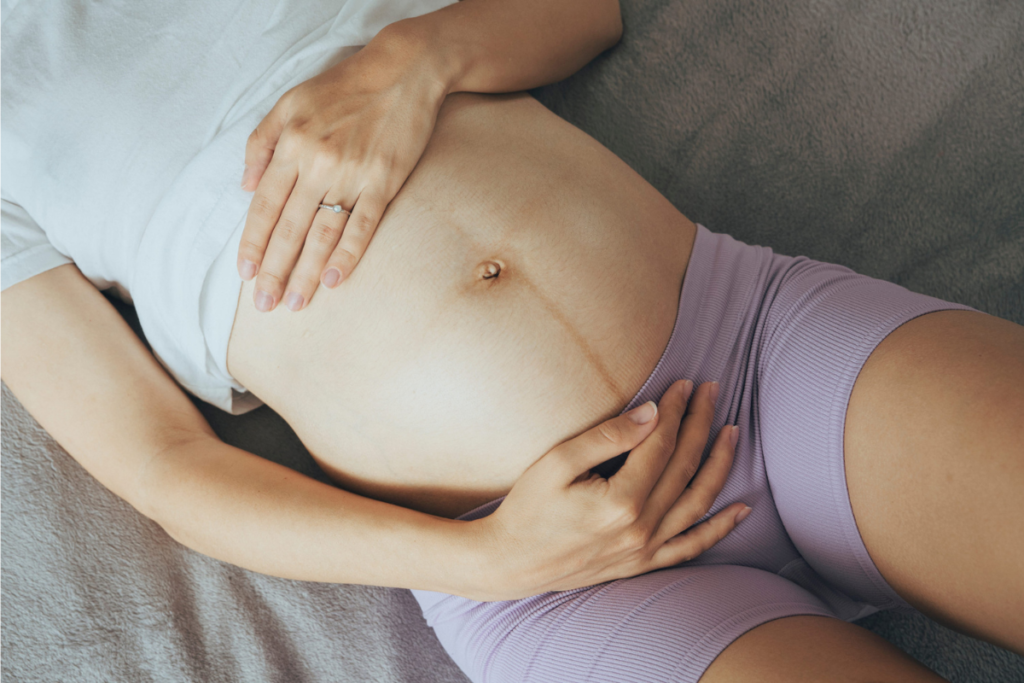
Diastasis Recti Abdominis (DRA)
During pregnancy, abdominal muscles stretch to allow the baby room to grow. (12) Diastasis recti is a condition in which the abdominal muscles overstretch causing a separation in the rectus abdominus (the 6-pack muscles) which are connected by the linea alba (a thin connective tissue). (12) Commonly separation occurs at the belly button region but it can be anywhere between the xyphoid process (bottom of chest plate) to the pubic bone. (10) Usually, there is no pain present in the abdominals. However, as a result, women often report weakness, a mound or ‘flabbiness’ in the affected area. (11) Secondary problems can arise such as the low back, hip and pelvic pain. (10) Sometimes the condition is referred to as DRAM (divarication of rectus abdominis muscle).
It can also occur in males with links to increasing age, activities and genetic factors. In infants or newborns, it can be inherited or due to the under-development of the muscles in babies born prematurely. (1)
Frequently Asked Questions
This is a common condition during and following pregnancy and is caused when the abdominal muscles are overstretched causing a separation in the rectus abdominus (the 6-pack muscles).
It is extremely common for a woman to experience a diastasis recti abdominis of some degree during or after pregnancy. (10)
It can also affect men or women with weakened abdominal muscles and excessive abdominal pressure/rapid weight gain/weight gain. (3)
No. Diastasis recti are not linked to any serious pathology. (11)
More often pregnancy-related diastasis recti (4 fingers and below) will improve within 4 – 6 weeks post-delivery; sometimes it needs additional input from a physiotherapist to aid recovery. (12)
If your diastasis recti persist and are not resolving, you should seek professional help from a physiotherapist on how best to address this. (11)
If you have any additional symptoms relating to bladder or bowel function you should contact your GP first. (12)
This condition is mainly associated with pregnancy. (11)
It can also affect premature babies due to the underdevelopment of abdominal muscles. (3)
In males, it is linked with an increase in age, weight fluctuations, weightlifting and inherited abdominal weakness. (1)
A feeling of a dip in-between the abdominal muscles above or below the belly button or both.
Feeling weak through the midsection.
Doming or tenting of the middle of the stomach. This can occur during activities such as lifting, rolling over in bed or certain exercises.
Exercise during pregnancy might help to reduce your risk of developing diastasis recti. (5,12)
Weight management. Pelvic floor strengthening. Post-pregnancy-specific physiotherapy exercises to help strengthen the core. (2)
In most cases, diastasis recti heal on its own between the postpartum period (the period following childbirth) of 6 weeks to 3 months. (1)
It may persist for some time after giving birth; specific exercises can be performed to improve the condition in these cases. (12)
We recommend consulting a musculoskeletal physiotherapist to ensure exercises are best suited to your recovery. If you are carrying out an exercise regime without consulting a healthcare professional, you do so at your own risk.

Diastasis recti is usually painless in the abdominals, but other symptoms include: (3)
In the past, it was thought that body mass index (BMI), weight gain during pregnancy, the weight of the baby and maternal age were considered risk factors. However, a recent study in 2015, found no significant correlation between these factors and developing the condition. (1)
During pregnancy, diastasis recti usually resolves spontaneously but can persist postpartum, in some cases for 6 months. In some case where the separation has been significant (6 fingers and above), it may take slightly longer. Assistance with physiotherapy exercises can aid the recovery of the abdominal muscles. (10)
This is not an exhaustive list. These factors could increase the likelihood of someone developing diastasis recti. It does not mean everyone with these risk factors will develop symptoms.

Diastasis recti is a very common condition following pregnancy. It has been reported to affect between 27%-100% in late pregnancy and 30%-60% of women postpartum. (8) Another study has estimated that it occurs in 52% of first pregnancies at 4-6 weeks postpartum and 39% at 6 months. (1) Umbilical hernias are less common and it has been found that the incidence is less than 0.1% in pregnant women. (9)
Musculoskeletal physiotherapists and other appropriately qualified healthcare professionals can provide you with a diagnosis by obtaining a detailed history of your symptoms. A series of physical tests might be performed as part of your assessment to rule out other potentially involved structures and gain a greater understanding of your physical abilities to help facilitate accurate diagnosis.
Your treating clinician will want to know how your condition affects you day-to-day so that treatment can be tailored to your needs and personalised goals can be established. Intermittent reassessment will ascertain if you are making progress towards your goals and will allow appropriate adjustments to your treatment.
Real-time ultrasound imaging can be an accurate way of measuring the gap between abdominal muscles. However, often a healthcare professional can conduct reliable tests in the clinic without the need for a scan. (7) Diastasis recti is likely to be confirmed if there is evidence of the following:
As part of your treatment, your musculoskeletal physiotherapist will help you understand the condition and what needs to be implemented to effectively manage your diastasis recti. This will include activity modification strategies, as well as other useful treatments aimed at reducing complications. Regular adherence to a condition-specific rehabilitation programme is important in the management of this condition. It should be noted that rehabilitation exercises are not always a quick fix, but if adhered to on a consistent basis, weeks to months, over time they have been shown to yield positive outcomes. (10)
How to check your ‘DRAM’
Lying on your back with knees bent, relax and place a hand above your belly button, fingers straight pointing towards your stomach. Slow curl your head and shoulders up. See how many tips you can fit between your rectus abdominal muscle; you should be able to feel the borders. If you are having difficulty, then draw in the lower tummy muscles first on lying before you curl up. If you are still having trouble, then you can contact a women’s health physiotherapist to help you.
Specific physiotherapy exercises directed by a healthcare professional that has a good knowledge of the condition is the first line of intervention. It is important to understand what type of exercises you can do to limit over-straining the abdominal area. (2)
Below are three rehabilitation programmes created by our specialist physiotherapists targeted at addressing diastasis recti. In some instances, a one-to-one assessment is appropriate to individually tailor targeted rehabilitation. However, these programmes provide an excellent starting point, as well as clearly highlighting exercise progression.
Our team of expert musculoskeletal physiotherapist have created rehabilitation plans to enable people to manage their condition. If you have any questions or concerns about a condition, we recommend you book an consultation with one of our clinicians.
For patients wanting to achieve a high level of function or return to sport, we would encourage a consultation with a physiotherapist as you will likely require further progression beyond the advanced rehabilitation stage.
As part of a comprehensive treatment approach, your musculoskeletal physiotherapist may also use a variety of other pain-relieving treatments for associated complications to support symptom relief and recovery. Whilst recovering, you might benefit from a further assessment to ensure you are making progress and to establish the appropriate progression of treatment.

If conservative management of diastasis recti is not beneficial and there is a hernia present, surgery can be considered. (9) There are two types of hernia surgery:
Your post-pregnancy body – NHS (www.nhs.uk)
https://thepogp.co.uk/Resources/119/fit_for_the_future
References
Other Conditions in Chest / Abdominal
