


Cubital Tunnel Syndrome
Cubital tunnel syndrome is the compression or irritation of the ulnar nerve in a tunnel on the inside of the elbow. (1)
The affected area of the elbow is often referred to as the “funny bone”.
This is a rare syndrome known as a compression neuropathy, which means persistent pressure is being placed on a specific nerve.
The ulnar nerve provides sensation to the little finger and some of the ring finger, and power to the smaller muscles within the hand. (1) The elbow is the most common site of irritation of the ulnar nerve. (2) However, it can be compressed or irritated at the neck, shoulder, and wrist causing similar symptoms to that of cubital tunnel syndrome, just higher up the arm, which then becomes a different diagnosis. (2)
The outer covering of the nerve, known as the myelin sheath, becomes irritated when compressed due to lack of blood flow. (2,3) The initial nerve fibres that are affected are those that conduct temperature and light touch. With progression of symptoms, the larger fibres that conduct impulses to activate the muscles can become affected which is when weakness or loss of muscle can be visibly apparent. (2,3,5) Pleasingly with appropriate conservative management, most cases settle well within 2-3 months. (4)
Frequently Asked Questions
Cubital tunnel syndrome is compression or irritation of the ulnar nerve in a tunnel on the inside of the elbow and produces numbness and/or pins and needles in the little finger, sometimes ring finger too.(Not to be confused with carpel tunnel syndrome a nerve compression in the hand).
Very rare. Cubital tunnel syndrome affects less than 1% of the general population however the incidence rate increases depending on medical history, job role and activity level. (1,2)
No. Normally the condition can be managed conservatively if diagnosed early. (1)
It is important to seek advice from a physiotherapist if your symptoms are persistent or worsening.
The condition affects twice as many men as women. (2)
More commonly seen in patients over 40 years of age. (2)
Those with arthritis, previous elbow injuries and problems around the soft tissue structures of the elbow may be more likely to get this condition. (2)
Those working in manual jobs. (2)
Athletes participating in sports that require overhead exercises. (3)
Numbness or tingling of the little and ring fingers are usually the first symptoms noticed. (1)
Symptoms may be provoked by leaning on the elbow or holding it at an awkward angle for a long period. (1)
There may be visible loss of muscle, particularly noticeable on the back of the hand between the thumb and first finger. (2,3)
In severe cases there may be a loss of grip strength.
Avoid or modify any activity that causes symptoms where possible.
Avoid excessive bending of the elbow at night. A folded towel wrapped around the elbow, or a splint at night might be useful.
Specific exercises as advised by your physiotherapist to help resolve the condition. (4)
The outcome depends upon the severity and persistence of the symptoms being treated.
Conservative treatment has a 90% success rate with symptoms usually resolving in 2-3 months. (4)
Surgery to release the nerve may be required in severe cases, or in those that do not respond to the non-surgical treatments above. (4,5)
We recommend consulting a musculoskeletal physiotherapist to ensure exercises are best suited to your recovery. If you are carrying out an exercise regime without consulting a healthcare professional, you do so at your own risk.

Cubital tunnel syndrome is a compression neuropathy. Given the important role that the elbow joint plays in many day-to-day activities, there are many factors that may contribute to the development of cubital tunnel syndrome:
This can be due to repetitive throwing activities, repetitive everyday activities like being on the phone, or excessive leaning on the elbow which leads to stretching of, friction on, or compression of the ulnar nerve. (1)
Narrowing of the cubital tunnel due to tighter muscles or changes in the anatomy of the elbow joint. (1,2)
Other factors such as metabolic disorders, congenital deformities, synovial cysts, anatomical irregularities, arthritis or joint inflammation can result in symptoms. (5)
This is not an exhaustive list. These factors could increase the likelihood of someone developing cubital tunnel syndrome. It does not mean everyone with these risk factors will develop symptoms:
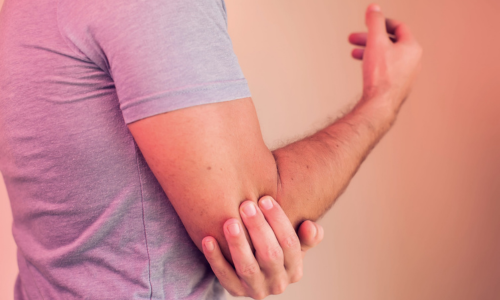
The incidence of cubital tunnel syndrome affects less than 1% of the population. (1) It is twice as common in men as in women and more commonly present in the left elbow. Symptoms usually present unilaterally (one elbow is affected). However, the syndrome may present in both elbows in 18-38% of patients. (5)
Musculoskeletal physiotherapists and other appropriately qualified health care professionals can provide you with a diagnosis by obtaining a detailed history of your symptoms. A series of physical tests might be performed as part of your assessment to rule out other potentially involved structures and gain a greater understanding of your physical abilities to help facilitate an accurate working diagnosis. Your physiotherapist or doctor may perform certain tests of the neck, as well as elbow, to help differentiate between causes of nerve irritation arising from the neck instead of the cubital tunnel. A neurological assessment may be performed to check the strength of the muscles in the arm, the sensation in your arm and hand, and your tendon reflexes.
Your treating clinician will want to know how your condition affects you day-to-day so that treatment can be tailored to your needs and personalised goals can be established. Intermittent re-assessment will ascertain if you are making progress towards your goals and will allow appropriate adjustments to your treatment to be made. Imaging studies like MRI or ultrasound scan are usually not required to achieve a working diagnosis, but in unusual presentations they may be warranted.
As part of the sessions with your physiotherapist, they will help you to understand your condition and what you need to do to help the recovery from your condition. This may include reducing the amount or type of activity, as well as other advice aimed at reducing your pain. It is important that you try and complete the exercises you are provided as regularly as possible to help with your recovery. Rehabilitation exercises are not always a quick fix, but if done consistently over weeks and months then they will, in most cases, make a significant difference.
Rehabilitation will be tailored specifically to the patient and encompass self-management through activity modification, technique correction, avoidance of pain provoking movements, analgesic advice, and work/sport specific advice. Pain-provoking movements will be discussed. An exercise programme will target mobilising the ulnar nerve and strengthening the musculature of the forearm and the upper quadrants.
Our team of expert musculoskeletal physiotherapist have created rehabilitation plans to enable people to manage their condition. If you have any questions or concerns about a condition, we recommend you book a consultation with one of our clinicians.
The outcome depends upon the severity of your symptoms. In cases of intermittent pins and needles or numbness you can expect there to be full resolution of symptoms in 2-3 months. (4) However, if symptoms are constant, especially those described as complete numbness, recovery timeframes are much longer and unpredictable.

Most cases improve well with the right conservative management. (4) However, surgery may be considered in more severe cases. Surgery generally prevents worsening of the muscle weakness, but improvements in muscle strength are often slow and incomplete. (5). Physiotherapy is therefore useful both as a conservative management approach, and pivotal in post-operative rehabilitation of this condition. (5)
References
Other Conditions in Elbows, Neurological, Orthopaedics

